


TL;DR — Quick picks
- Best overall value: DataImpulse — $1/GB, $5 minimum purchase, and non-expiring traffic.
- Lowest advertised bulk rate: Thordata — from $0.65/GB, but verify the required volume before buying.
- Best low-cost trial: Proxy-Seller — 3-day trial for $1.99.
- Best for simple pay-as-you-go use: FloppyData — $1/GB residential traffic.
- Best for geo-targeting options: LumiProxy — from about $0.78/GB, with country and city targeting.
Cheap Residential Proxy Pricing Comparison
Compare entry-level residential proxy pricing and the ideal use case for each provider.
| Provider | Price | Best For |
|---|---|---|
| 1. DataImpulse ↗ | $5 for 5 GB ($1/GB) | General scraping and price monitoring. |
| 2. Thordata ↗ | Verify at checkout | Large-scale data collection. |
| 3. Proxy-Seller ↗ | $3.50 for 1 GB | Rotation, city, and ISP controls. |
| 4. FloppyData ↗ | $1/GB | Small and flexible projects. |
| 5. LumiProxy ↗ | Verify at checkout | Geo-targeted scraping. |
| 6. Proxy-Cheap ↗ | $2.99 minimum listed | Beginners wanting a simple dashboard. |
| 7. MangoProxy ↗ | $3.20/GB for 10 GB* | Users needing specific GEO options. |
| 8. PlainProxies ↗ | Verify at checkout | Flexible proxy plan comparisons. |
| 9. Webshare ↗ | $2.99 billed monthly) | Static residential IPs, long-term sessions, and unlimited-bandwidth tasks. |
| 10. PrivateProxy.me ↗ | $10 for 10 GB ($1/GB) | Sticky sessions and static IP options. |
How We Ranked These Providers
We ranked each provider after researching and testing its official residential-proxy page, current pricing, minimum purchase, traffic expiry, IP pool, location targeting, session controls, protocols, trial options, documentation, and public user feedback. The final position is based on overall value—not only the lowest advertised price—so providers with transparent pricing, useful features, flexible plans, and stronger buyer value rank higher.
The 10 providers, reviewed in depth
Listed in your requested order. Each provider gets a full breakdown: real specs, pros, cons, and an honest verdict.
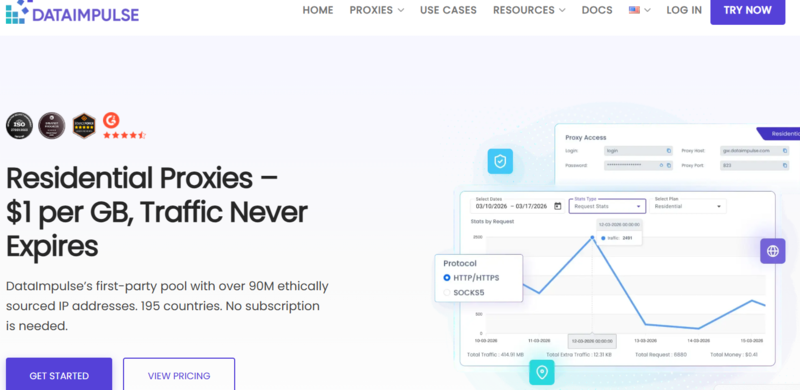
DataImpulse is a strong value option for general scraping and price monitoring. Residential traffic starts at $1/GB, with a $5 minimum purchase for 5 GB. It advertises 90M+ IPs across 195+ countries, supports HTTP(S), SOCKS5, rotating and sticky sessions, and unused traffic never expires. For more details, read our DataImpulse Review.
Pros
- $1/GB pricing with a low $5 minimum
- Traffic never expires
- Free country targeting
- Supports rotating and sticky sessions
- HTTP(S) and SOCKS5 support
Cons
- Advanced city, ZIP, state, and ASN targeting costs extra
- Premium residential plans are more expensive
- Test performance on your own target before scaling
Thordata offers rotating residential proxies from $0.65/GB and advertises a pool of 100M+ residential IPs across 190+ countries and regions. It supports rotating and sticky sessions, HTTP(S) connections, and free targeting by country, city, state, and continent. Thordata also provides API documentation and scraping tools for larger data-collection workflows.
Pros
- Residential proxies advertised from $0.65/GB
- 100M+ provider-reported residential IP pool
- 190+ countries and regions
- Free country, city, state, and continent targeting
- Supports rotating and sticky sessions
- API documentation and proxy integration guides available
- Free trial is available
Cons
- The lowest advertised price may require a larger plan or promotional pricing
- Confirm the final checkout price before buying
- Provider-reported speed and success-rate claims should be tested on your own target
- Refund terms and traffic expiry should be checked before purchasing
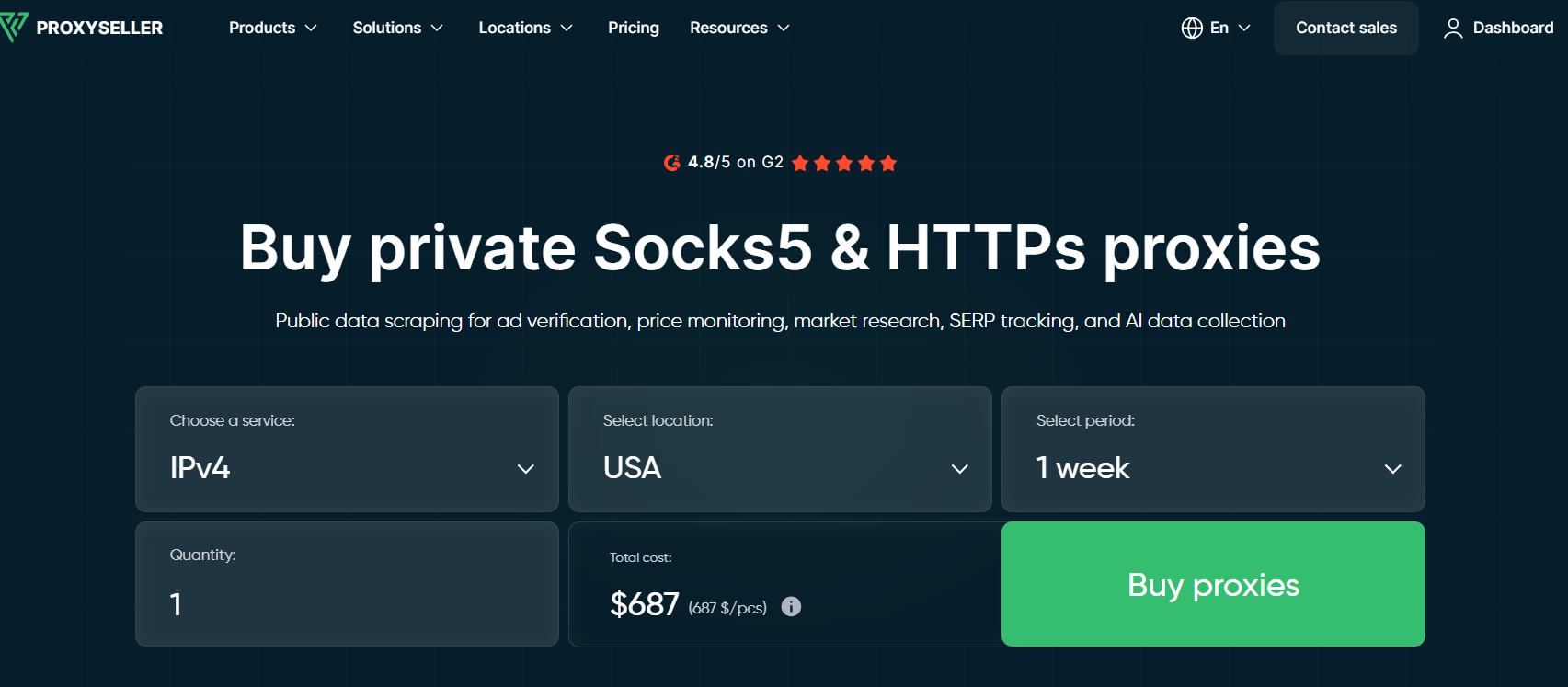
Proxy-Seller offers rotating residential proxies with a $1.99 three-day trial. Standard pricing starts at $3.50 for 1 GB, while the provider advertises lower rates from $1.30/GB at higher volume. Its residential network includes 47M+ IPs across 220+ locations, with country, region, city, and ISP targeting. Users can choose per-request, timed, or sticky rotation and connect through HTTP(S) or SOCKS5. For more details, read our Proxy-Seller Review.
Pros
- Low-cost $1.99 trial for testing
- 47M+ provider-reported residential IPs
- Coverage across 220+ locations
- Country, region, city, and ISP targeting
- Per-request, timed, and sticky session controls
- HTTP(S) and SOCKS5 support
- Username/password and IP allowlist authentication
- Unlimited proxy lists and API access
Cons
- $3.50/GB entry price is higher than $1/GB providers
- $1.30/GB rate requires higher-volume purchasing
- Check trial traffic limits and final checkout price
- Test performance and location accuracy on your own target before scaling
FloppyData offers rotating residential proxies at $1/GB across 195+ locations. The same traffic balance can be used for residential, mobile, or datacenter proxies, which gives users flexibility when project needs change. It supports country and city targeting, rotating sessions, and static proxy products for users who need a consistent IP. For more details, read our FloppyData Review.
Pros
- Simple $1/GB residential pricing
- Coverage across 195+ locations
- Residential, mobile, datacenter, and static proxy options
- Same traffic balance can be used across rotating proxy types
- Country and city targeting
- Good fit for small or flexible projects
- No large monthly commitment required
Cons
- Check whether your selected traffic package expires or does not expire
- Static residential proxies are billed differently from rotating residential traffic
- Pool size and speed claims should be tested on your own target
- Advanced location options may vary by proxy product
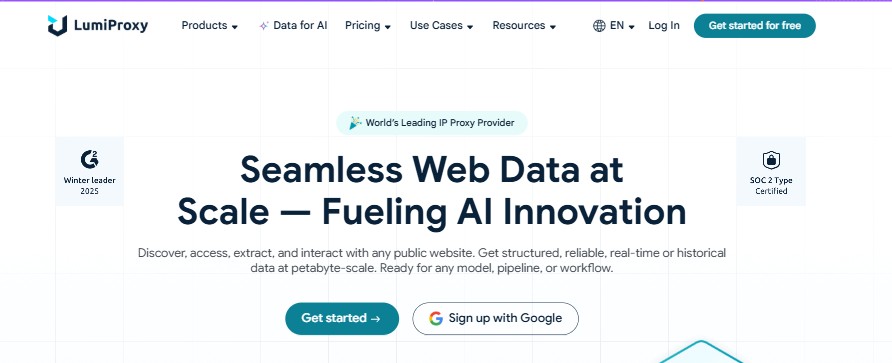
LumiProxy offers rotating residential proxies from $0.78/GB. It advertises a 90M+ IP pool across 195+ locations, with free country and city targeting, unlimited concurrent sessions, and sticky sessions lasting up to 90 minutes. The service supports HTTP(S) and SOCKS5 connections for scraping, price monitoring, ad verification, and localized testing.
Pros
- Residential pricing advertised from $0.78/GB
- 90M+ provider-reported IP pool
- Coverage across 195+ locations
- Free country and city targeting
- Sticky sessions up to 90 minutes
- Unlimited concurrent sessions
- HTTP(S) and SOCKS5 support
Cons
- The lowest advertised price may require a specific plan or traffic volume
- Confirm traffic expiry and refund policy before purchasing
- Advanced targeting options may vary by plan
- Test connection quality and GEO accuracy on your own target before scaling
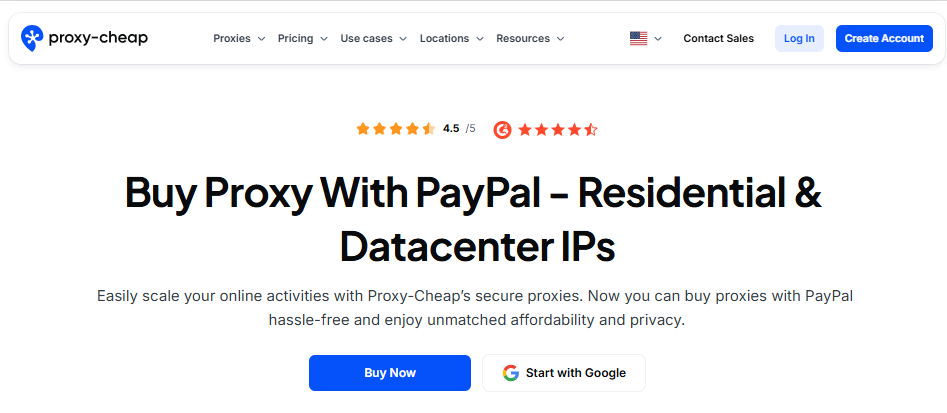
Proxy-Cheap offers rotating residential proxies with monthly pricing from $1.50/GB for 3 GB+, dropping to $0.78/GB for 51 GB+ on its current pricing table. It supports username/password authentication, unlimited threads, and both rotating and sticky sessions. The provider also offers static residential, mobile, and datacenter proxies. For more details, read our Proxy-Cheap Review.
Pros
- Residential pricing from $1.50/GB for smaller monthly plans
- Rate drops to $0.78/GB at 51 GB+
- Sticky and rotating sessions available
- Unlimited threads advertised
- Supports location-based proxy selection
- Multiple proxy types available under one provider
- 24/7 support advertised
Cons
- The page headline says “from $0.49/GB,” but its visible residential pricing table starts at $1.50/GB
- Lowest rate requires a larger traffic purchase
- Pricing and features differ between rotating and static residential products
- The page shows inconsistent IP-pool figures, so verify details before purchasing
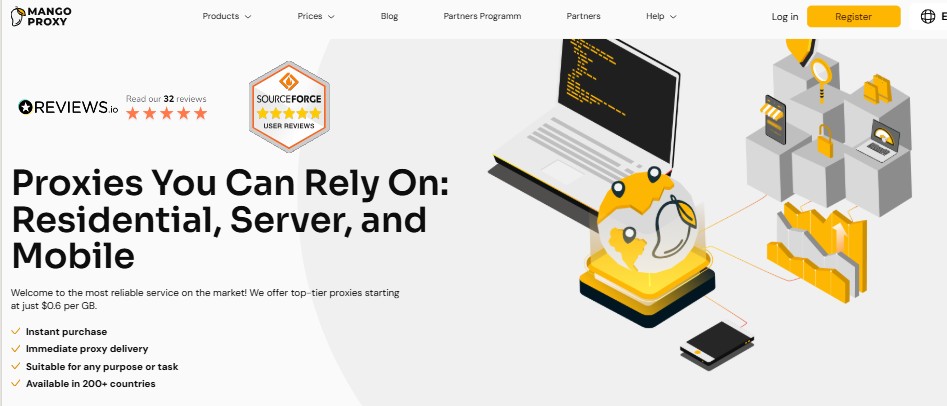
MangoProxy’s standard rotating residential proxies start from $2/GB. It advertises a pool of 90M+ IPs across 200+ locations, with targeting by continent, country, state, postcode, coordinates, and ASN. The service includes a connection-string generator, public API, and integrations with third-party tools.
Pros
- 90M+ provider-reported residential IPs
- Coverage across 200+ locations
- Detailed GEO targeting, including state, postcode, coordinates, and ASN
- HTTP(S) and SOCKS5 support
- Connection-string generator and public API
- Supports integrations with many third-party tools
- Card and cryptocurrency payment options
Cons
- Standard residential plans start at $2/GB, not the $0.60/GB rate shown for its separate datacenter product
- Residential Light and dynamic ISP products have different prices and features
- KYC may be required for payments processed through Stripe
- Check the exact product, traffic expiry, and refund policy before purchasing
PlainProxies offers residential proxy plans from €11.50 for 5 GB (€2.30/GB), with rates dropping to €0.95/GB at 500 GB. It advertises 25M+ residential IPs in 195+ countries, city and state targeting, 50,000 concurrent connections, and rotating or sticky sessions lasting up to 24 hours. Plans are valid for 30 days.
Pros
- 25M+ provider-reported residential IPs
- Coverage across 195+ countries and cities
- City and state targeting included
- Rotating and sticky sessions up to 24 hours
- HTTP(S) and SOCKS5 support
- 50,000 concurrent connections advertised
- Pricing falls to €0.95/GB at 500 GB
- 24/7 priority support advertised
Cons
- Small plans are expensive: €2.30/GB for 5 GB
- Traffic plans are valid for 30 days
- Lowest rate requires a 500 GB purchase
- The page’s “unlimited bandwidth” wording can be confusing because plans still have a stated GB allowance
- Test location accuracy and performance on your own target before scaling
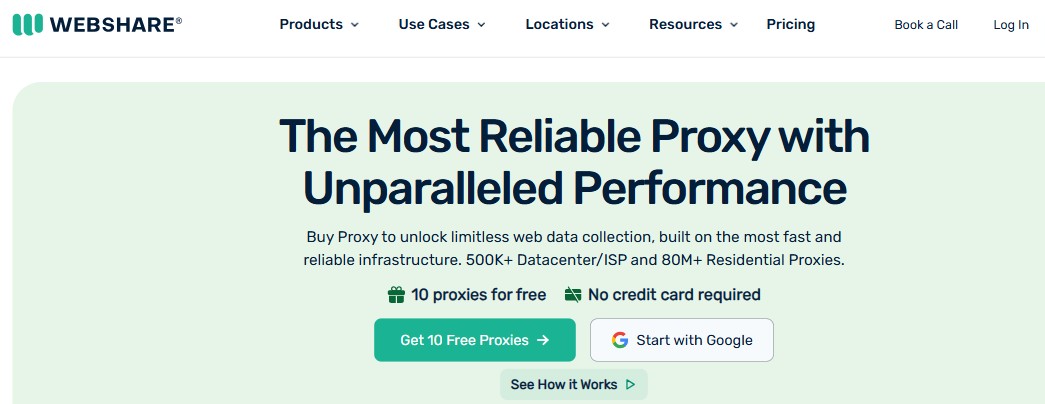
Webshare sells static residential, also called ISP, proxies with fixed IP addresses and monthly per-proxy billing. Its shared 250 GB plan starts at $0.30 per proxy per month for 20 proxies, while the headline price of $0.23 per proxy applies only at larger volumes. Webshare advertises 30M IPs across 195+ locations, speeds up to 1 Gbps, HTTP and SOCKS5 support, and private or dedicated plan options. For more details, read our Webshare Review.
Pros
- Very low per-proxy pricing for large shared-proxy orders
- Fixed IP address for stable, long-term sessions
- Shared, private, and dedicated plan options
- HTTP and SOCKS5 support
- Up to 1 Gbps speed advertised
- 30M provider-reported IPs across 195+ locations
- Plans with up to unlimited bandwidth, subject to fair-use rules
- 10 free proxies are advertised with no credit card required
Cons
- This is a static residential/ISP product, not rotating residential traffic billed per GB
- Lowest $0.23 per-proxy rate requires a large 5,000+ proxy order
- Shared proxies are used by more than one customer
- Unlimited-bandwidth claims are subject to Webshare’s Fair Usage Policy
- Private and dedicated plans cost significantly more than shared plans
PrivateProxy.me offers both rotating and static residential proxies. Its rotating residential plans begin at $20 for 10 GB ($2/GB) and drop to $1/GB at 1 TB; a 10 GB trial costs $10 and is valid for 30 days. The provider advertises a 200M+ IP pool across 195 countries, country and city targeting, rotating sessions, and sticky sessions of up to 24 hours. Static residential proxies are sold separately, starting at $5 per IP per month on self-service plans.
Pros
- Rotating and static residential proxies available
- 10 GB trial for $10
- 200M+ provider-reported residential IP pool
- Coverage across 195 countries
- Country and city targeting
- Sticky sessions up to 24 hours
- HTTP(S) and SOCKS5 support
- Static plans include unmetered bandwidth and one free IP swap per month
- Card, PayPal, and cryptocurrency payment options
Cons
- Standard rotating plans start at $2/GB, so it is not among the cheapest small-package options
- $1/GB rate requires a 1 TB monthly plan
- Static and rotating products use different billing models and should not be compared directly
- Trial traffic expires after 30 days
- Test location accuracy and performance on your own target before scaling
Choose by use case
Match the provider to the workflow, not the other way around.
Use case | Best pick | Backup |
|---|---|---|
Web scraping at scale | DataImpulse | Thordata |
Sneaker bots | Oculus Proxies | Proxy-Seller |
Social media accounts | PrivateProxy.me | Oculus Proxies |
SEO rank tracking | Proxy-Seller | LumiProxy |
Ad verification | LumiProxy | DataImpulse |
Just testing | Proxying.io (free 2 GB | GoProxy.com (7-day trial) |
Tightest budget | Proxy-Seller (at scale) | DataImpulse |
Red flags to watch for
Five warning signs that separate legitimate budget services from problematic ones.
Hidden pricing on the official site
If a provider can't show actual prices on its own pricing page, that's a transparency failure to address before paying.
No-refund or stacked-condition refund policies
"1 refund max, 7 days, 2 GB used, no crypto refunds" stack to make refunds practically impossible in real-world cases.
Zero organic Reddit discussion
Established services generate threads in r/webscraping and r/proxy. Total silence on a 12+ month service is a soft warning.
"Residential" IPs flagging as datacenter
Run any new provider through IPQualityScore before committing to volume. Some sell datacenter IPs as residential.
Brand-name confusion
SmartProxy.org vs Decodo (formerly Smartproxy.com); GoProxy.com vs GoProxies.com — verify the URL matches the company you researched.
Frequently asked questions
Answers to the questions buyers ask most.
Proxy-Seller and SmartProxy.org both advertise from $0.70/GB at higher volumes, followed by LumiProxy at $0.80/GB and Oculus sneakers tier at $0.85/GB. For pay-as-you-go without volume commitment, DataImpulse at $1/GB with non-expiring traffic is the best balance.
For most non-enterprise tasks, yes. Premium providers offer larger pools and stronger compliance, but at 3-8× the price. Mid-budget options handle general scraping, SEO monitoring, and ad verification well.
Yes in most jurisdictions, provided two conditions: IPs must be sourced from consenting users (reputable providers use opt-in SDK partnerships), and your usage must comply with target site terms and applicable laws like GDPR and CCPA. Not legal: scraping personal data without consent, bypassing authentication you don't have permission for, or facilitating fraud.
Depends on IP quality. DataImpulse and PrivateProxy.me tend to perform better than the cheapest options. Pair with browser fingerprinting tools like Multilogin or AdsPower for tough targets.
Run it through IPQualityScore, IP2Location, or Pixelscan. The usage type should show "ISP" or "Cable/DSL" — not "Data Center" or "Hosting." Some providers sell datacenter IPs masquerading as residential.
Rotating proxies switch IPs with every request — ideal for high-volume scraping. Sticky proxies keep the same IP for 5–120 minutes — needed for login flows, multi-page workflows, or session-based scraping where consistent identity matters.
Most cheap providers accept credit cards, PayPal, and crypto (BTC, ETH, USDT). Crypto payments are usually non-refundable — verify the policy before paying.
Final verdict
If I had $50 to spend today on general-purpose scraping
I'd pick DataImpulse. The combination of $1/GB pricing, 90M+ first-party IPs, traffic that never expires, $5 entry point, and 4.8/5 G2 rating puts it ahead of cheaper but less proven alternatives.
For sneakers, Oculus Proxies. For account management where IP cleanliness matters more than volume, PrivateProxy.me. For multi-type proxies under one account from an established provider, Proxy-Seller. For high-volume scraping with bundled APIs, Thordata. For risk-free testing, Proxying.io's free 2 GB.
The cheap residential proxy market in 2026 is the healthiest it's been. Test small, verify IP quality before scaling, and pick the provider matched to your workflow — not the one with the cheapest headline price.