

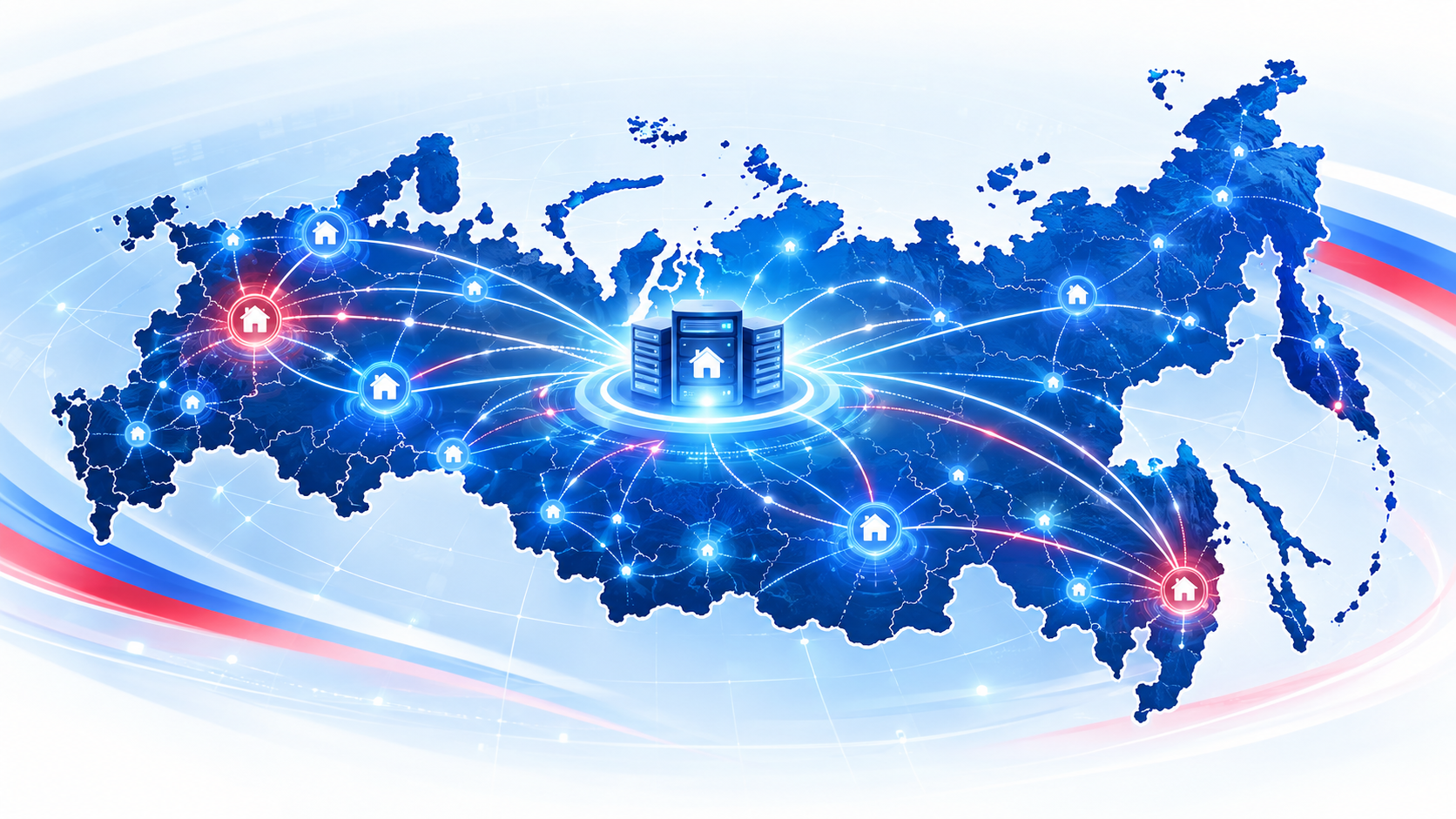
Which one should you pick?
Start with what matters most to you. Tap a card to jump to that review.
- Best overall: ProxyEmpire — most precise Russian targeting (region, city, ZIP, ISP and ASN)
- Best for a large IP pool: SOAX — 2M+ advertised Russian IPs across many cities
- Best for clean IPs: NodeMaven — filters weak IPs out, great for browser automation
- Best for rotation control: Proxy-Seller — per-request, sticky, or a custom 1–3,600 second timer
- Best budget option: Webshare — low per-GB price, Russian city targeting, easy setup
- Best for city targeting: IPBurger — pick a Russian city and go, no extra product needed
- Best for heavy traffic: ProxyRack — unlimited data, priced by threads instead of per GB
All 7 providers at a glance
Here's the short version. Scroll down for the full breakdown of each one.
| Provider | Best for | Russia targeting | Rotation | Sticky sessions | Pricing |
|---|---|---|---|---|---|
| ProxyEmpireOur top pick | Best overall | Region, city, ZIP, ISP, ASN | Yes | Yes | Per GB |
| SOAX | Big Russian pool | Region, city, ISP/carrier | Yes | Yes | Subscription + credits |
| NodeMaven | Clean IPs | City, ZIP, ISP | Yes | Yes | Per GB |
| Proxy-Seller | Rotation control | Country, region, city, ISP | Per request or custom | Yes | Per GB |
| Webshare | Budget | Country, city | Yes | 1 min to 24 hrs | Per GB |
| IPBurger | City targeting | Country, city (more filters on bigger plans) | Yes | Up to 30 min | Per GB |
| ProxyRack | Heavy traffic | Country, city, ISP | Yes | Yes | By threads, unlimited data |
Comparison: 7 Best Providers at a Glance
Best for: Russian geo-targeting, local data collection, Yandex tracking, marketplace research and long-running sessions.
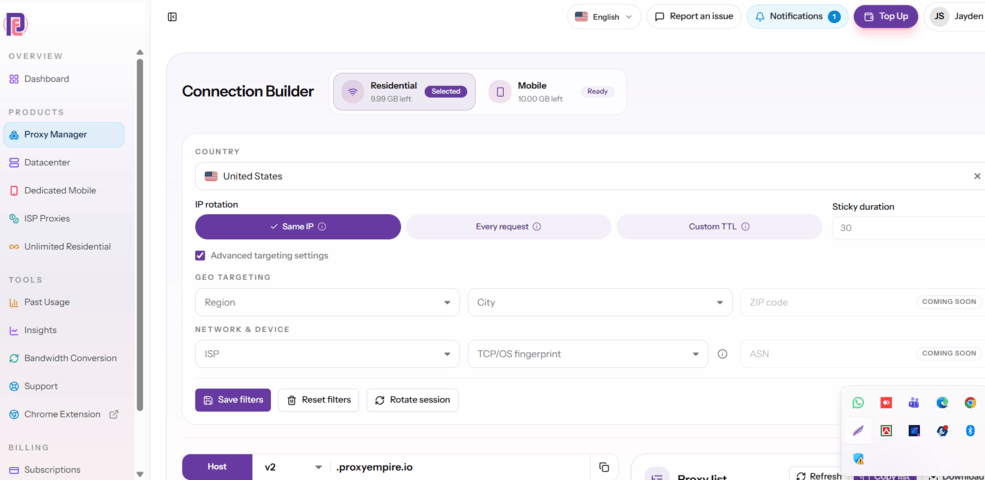
Proxyempire Dashboard
ProxyEmpire comes first because it gives you more Russia-specific control than anyone else we reviewed.
Its residential network covers the big cities, like Moscow, Saint Petersburg, Kazan, Novosibirsk and Vladivostok. It also says it reaches hundreds of local networks, including Russian ISPs such as Rostelecom, Beeline and Dom.ru.
The targeting is where it pulls ahead. You can narrow your IPs by region, city, ZIP code, ISP and ASN. That's useful for local SERP tracking, regional price checks, marketplace research and browser automation.
You get rotating and sticky sessions over HTTP(S) or SOCKS5. Rotate for high-volume scraping, or keep the same Russian IP when your task needs it. For more information, read our Proxy empire Review.
Russia highlights
Pros:
Plenty of providers have Russian IPs. Very few let you choose where those IPs come from this precisely. That matters in Russia, because Yandex and regional marketplaces often show different results from city to city. A generic "Russia" IP won't always show you what someone in Kazan actually sees.
Cons:
It isn't the cheapest choice for small jobs. If basic country-level Russian IPs are all you need, you can pay less elsewhere. Also, double-check which product you're buying. Residential, mobile and datacenter plans don't all share the same targeting or pricing.
Best for: Large-scale Russian data collection, city-level targeting, local market research and teams that need wide regional coverage.
Proxyempire Dashboard
Pick SOAX if the size and spread of the Russian pool matters most. It advertises more than 2 million Russian IPs, with residential coverage across a long list of regions and cities.
That list includes Moscow, Saint Petersburg, Kazan, Novosibirsk, Vladivostok, Sochi, Yekaterinburg, Omsk, Samara, Krasnodar and Kaliningrad. You can filter by region, city and network operator, which helps when a plain "Russia" IP isn't specific enough.
You can rotate on every request or hold the same IP for longer. It supports HTTP(S) and SOCKS5, and higher plans unlock more advanced targeting options. For more information, read our Soax Review.
Russia highlights
What we like
SOAX is open about its Russian coverage. You can target everywhere from Moscow and Saint Petersburg to cities like Kazan, Omsk, Vladivostok, Krasnodar, Perm, Ufa and Chelyabinsk. Great if you want to compare how sites, search results or prices look in different parts of the country.
What could be better
The pricing takes some figuring out. You pay a plan fee plus credits, and traffic rates change with geo tier and plan level. If you only need a few GB of Russian traffic, work out your real monthly cost before you sign up.
Best for: Browser automation, multi-account work, local research and projects where IP reputation matters.
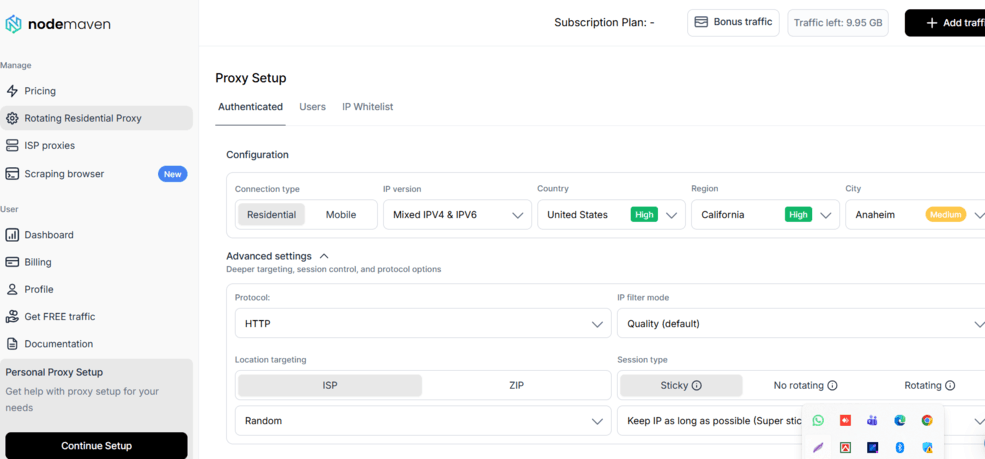
NodeMaven Dashboard
NodeMaven doesn't try to win on pool size. Its pitch is IP quality: it filters out weaker IPs before you ever get them.
You get Russian residential proxies with rotating and sticky sessions, HTTP(S) and SOCKS5, and targeting down to city and ISP. ZIP-level targeting is also available across its platform.
In Russia, it lists IPs in Moscow, Saint Petersburg, Novosibirsk, Yekaterinburg, Nizhny Novgorod, Samara, Omsk, Kazan, Rostov-on-Don and Chelyabinsk. It also markets its Russian proxies directly for Avito, VK and Yandex work, so it feels built for the local market rather than tacked onto a global pool. For more information, read our NodeMaven Review.
Russia highlights
What we like
The filtering. NodeMaven says its system keeps removing low-quality IPs and that over 95% of its IPs stay clean. That's the company's own number, not our Russia test. Still, if consistency matters more to you than having the biggest pool, this approach makes a lot of sense.
What could be better
The overall pool is smaller than some bigger names. If raw size is your priority, SOAX or another large network may suit you better. Keep in mind that pool size alone doesn't tell you how many Russian IPs are usable at any given moment.
Best for: People who want to decide exactly how often their Russian IPs change.
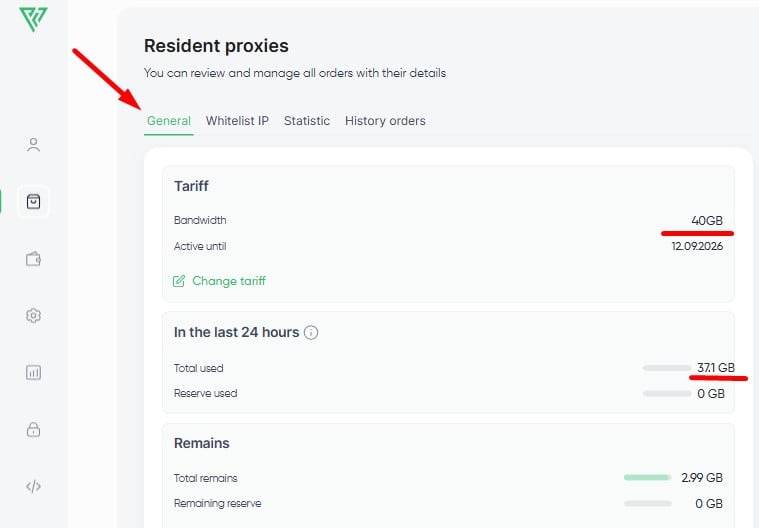
Proxy-seller Dashboard
Proxy-Seller has a dedicated Russia location plus a wider residential network with 47M+ IPs across 220+ locations. You can target by country, region, city and ISP.
What makes it different is rotation. You can get a new IP on every request, rotate on a timer, or keep a sticky session that never changes. Through the API, you can even set a custom rotation time anywhere from 1 to 3,600 seconds.
That's handy because Russian proxy jobs don't all behave the same way. A scraper usually wants frequent rotation. Browser automation or a multi-step task often needs the same IP for longer. For more information, read our Proxy-Seller Review.
Russia highlights
What we like
You get more say over session behavior than with most basic services. Instead of just "rotating or sticky", you can set the exact interval in code. That's great for automation where you want IP changes to be predictable, not random.
What could be better
Proxy-Seller sells a lot of proxy types: IPv4, ISP, IPv6, mobile, datacenter and residential. Make sure you're buying the residential product. Its features and billing aren't the same as the dedicated Russian IPv4 packages.
Best for: Cheaper Russian residential traffic, smaller scraping projects and anyone who wants a simple setup.
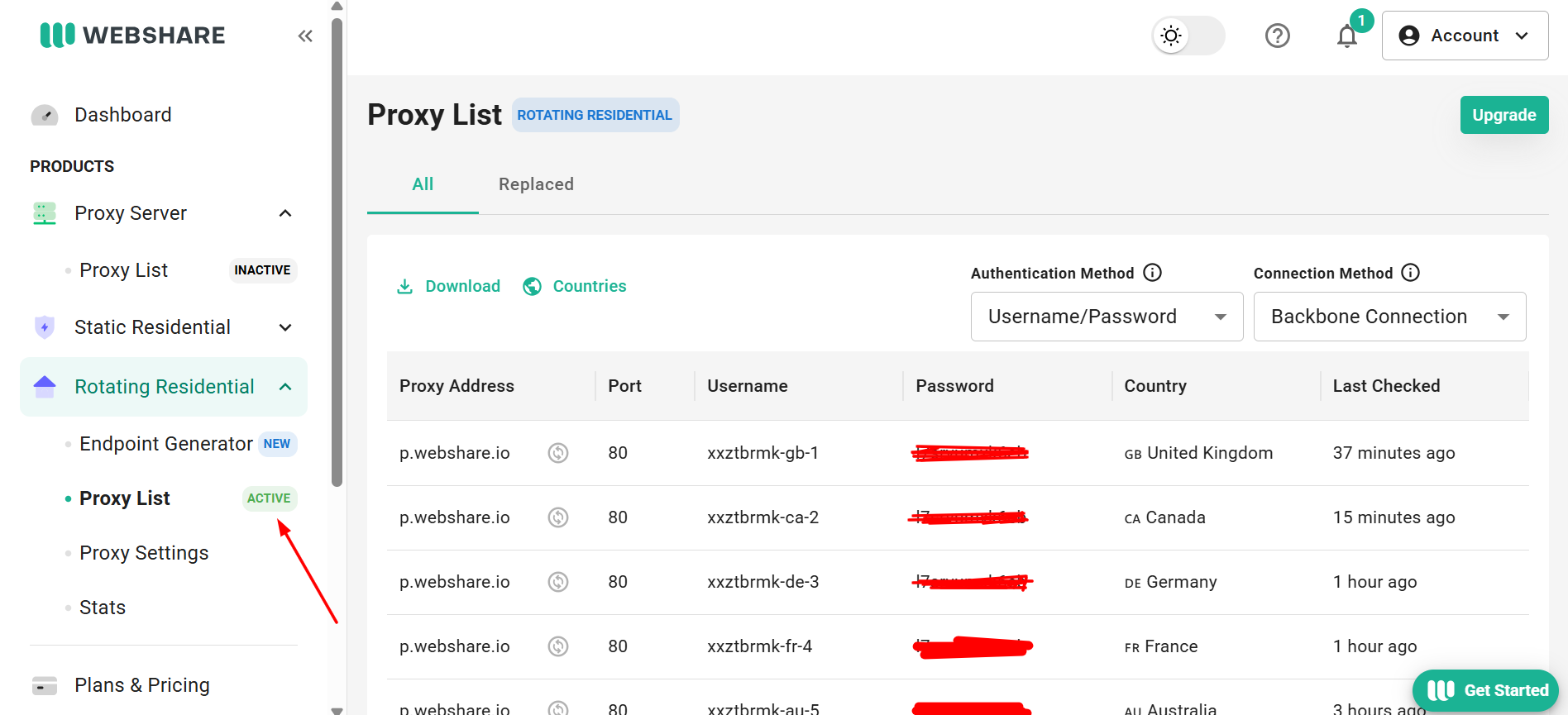
NodeMaven Dashboard
Webshare is one of the cheaper ways to tap into a big residential network and still pick Russia as your exit location.
It lists a large number of Russian IPs and lets you connect to Russia through its residential plans. Bandwidth pricing is competitive.
Its Endpoint Generator keeps things simple: choose a country and city, pick rotating or sticky, and you're done. For Russia, country and city targeting are the options you'll actually use. For more information, read our Webshare Review.
Russia highlights
What we like
Good price, easy to use, and solid session control. The Endpoint Generator lets you pick Russia, narrow it to a city if you want, choose rotating or sticky, and export ready-to-use credentials in a few clicks.
What could be better
Not every targeting option on the platform works for Russia. For example, you can't simply stack an ASN filter on top of a country filter the way you can with city. Check that the exact filters you need are supported.
Best for: City-specific research, local SERP tracking, regional price checks and easy Russian geo-targeting.
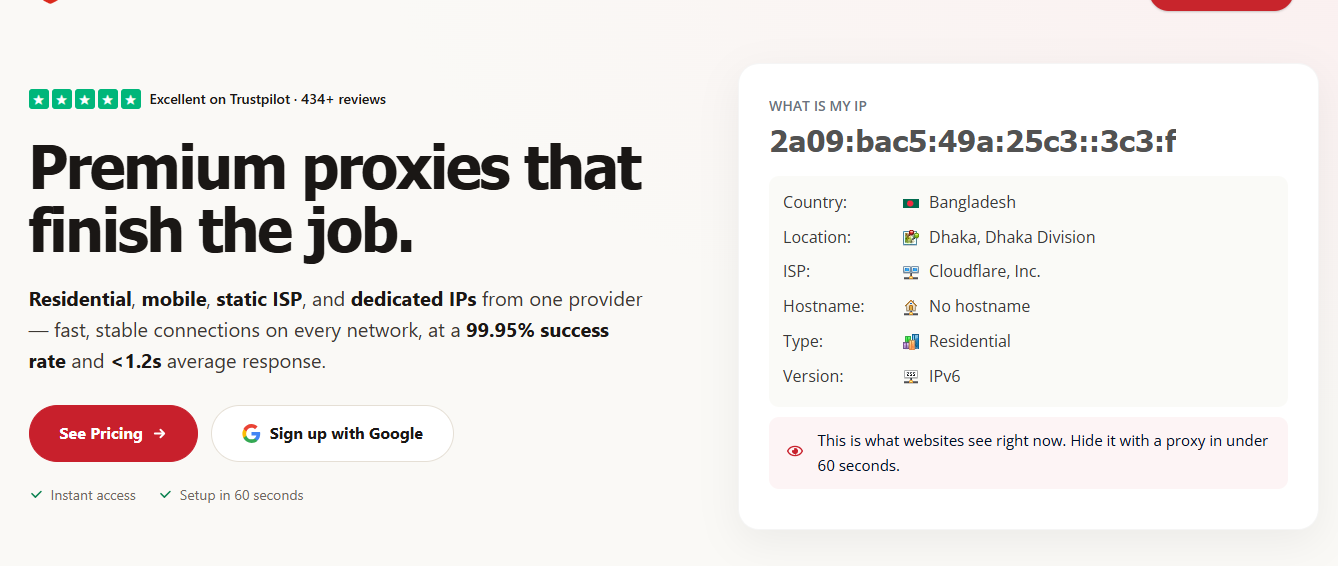
NodeMaven Dashboard
IPBurger has dedicated Russian coverage inside a large global residential pool, and Russia is a location you can simply select.
For Russian projects, location targeting is the main draw. Entry plans include country and city targeting. Bigger plans add state, ISP and ASN filters.
It supports rotating and sticky sessions, so it works well for local tracking where you need a Moscow (or other city) IP rather than just "somewhere in Russia".
Russia highlights
What we like
It keeps things simple. Pick Russia, narrow it to a city, and go. No separate Russian product needed. Higher plans add finer filters like ISP targeting.
What could be better
Price. IPBurger can cost more per GB than several others here. Sticky sessions also top out sooner than services built for multi-hour sessions.
Best for: High-bandwidth projects, nonstop data collection and teams that would rather pay for connections than per GB.
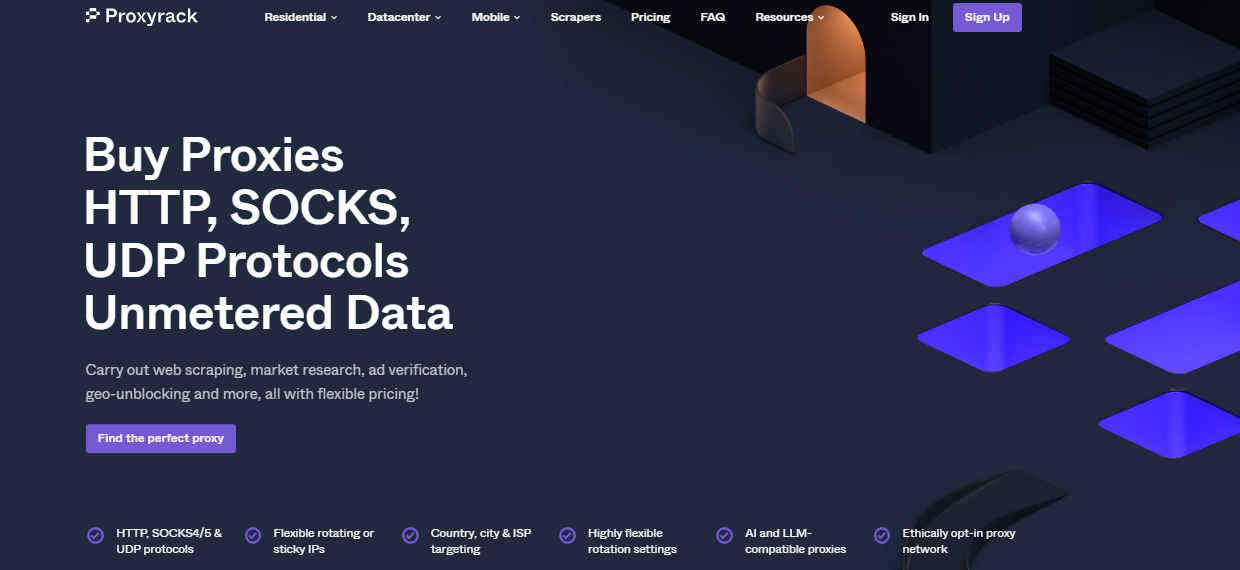
NodeMaven Dashboard
ProxyRack prices things differently. Its Unlimited Residential plan is sold by the number of threads (connections), and you can move as much data as those threads can handle.
You can set a target country in the dashboard or in your login string, and its docs also cover city and ISP targeting.
For Russia, you just tell it to pull Russian IPs instead of random ones from the global pool. Random ports rotate IPs often. Sticky ports keep the same IP for a set time.
Russia highlights
What we like
If you push a lot of data every month, a fixed thread-based plan is much easier to budget than paying for every single GB.
What could be better
It's probably overkill for small users. If you only need a little Russian traffic, a normal per-GB plan will usually be simpler and cheaper. The pool is also dynamic, so the number of Russian IPs available can change from moment to moment.
Why use a residential proxy for Russia?
A Russian residential proxy sends your traffic through a home internet connection in Russia. To the website, it looks like a regular Russian user on a local ISP, not a datacenter. That's helpful whenever location changes what a site shows you.
Local search tracking
Search results change by location. A Russian IP lets SEO teams see local results and compare regions like Moscow, Saint Petersburg, Kazan or Novosibirsk.
Wildberries and Ozon
Two of Russia's biggest marketplaces. Track public data like prices, stock, search placement, sellers and regional differences.
Ad verification
Running geo-targeted ads? A local IP in the right city or region lets you see whether they show up correctly.
Yandex research
Russian SEO usually means Yandex, not just Google. City-level targeting is often more useful here than any random Russian IP.
Avito research
Check public listings, categories, regional availability and prices across different Russian cities.
Price monitoring
Compare public prices across regions or track changes over time. City targeting helps when stock, delivery or prices vary by location.
Frequently asked questions
It's a proxy that routes your traffic through a home internet connection in Russia. Websites see a Russian residential IP instead of your real one or a datacenter IP.
We rank ProxyEmpire first for its Russian coverage and detailed targeting by region, city, ZIP, ISP and ASN. SOAX may suit you better if pool size is the priority, and Webshare is a good pick if you're watching your budget.
Yes. Several providers here offer city-level targeting, so you can request Moscow IPs whenever they're available in the live pool.
Yes. Any provider with Russian city targeting can give you Saint Petersburg IPs when they're online. Residential pools change during the day, so the exact number available will vary.
Some providers support ISP targeting. If one ISP is essential for you, confirm it's available before you buy. Not every network has active IPs from every Russian ISP all the time.
Most providers here offer rotating proxies, and many also offer sticky sessions that hold the same IP for a set time. Just note that a sticky residential IP isn't the same as a permanent static ISP proxy.
It depends on the job. Residential IPs come from home internet networks, so they look more like normal users. Datacenter proxies are usually faster and cheaper, but they come from hosting servers.
It varies. Budget services can start at a few dollars per GB, while premium networks cost more. Buying in bulk usually lowers the price per GB. Some providers also sell unlimited-data plans priced by threads instead of usage.
Yes, for legitimate tasks like local search research, rank tracking and checking public Yandex results from different locations. For local tracking, pick a provider with Russian city targeting.
Residential proxies can help with collecting and monitoring public marketplace data such as prices, listings, stock and regional differences. Always follow the site's terms, access rules and the law that applies to you.
It depends on your project, but useful ones include Moscow, Saint Petersburg, Kazan, Novosibirsk, Yekaterinburg, Samara, Omsk, Krasnodar, Vladivostok and Rostov-on-Don. For nationwide work, choose a provider with wide regional coverage over one that only has Moscow.
 Related guides