
How to Use Residential Proxies for Market Research?

by Jayden Sprent // March 5, 2026
Residential Proxies for market research are used to collect publicly available data from different locations and networks. They help analysts observe pricing, trends, content, and consumer behavior as it appears to users in specific regions, supporting more accurate and location-aware research.
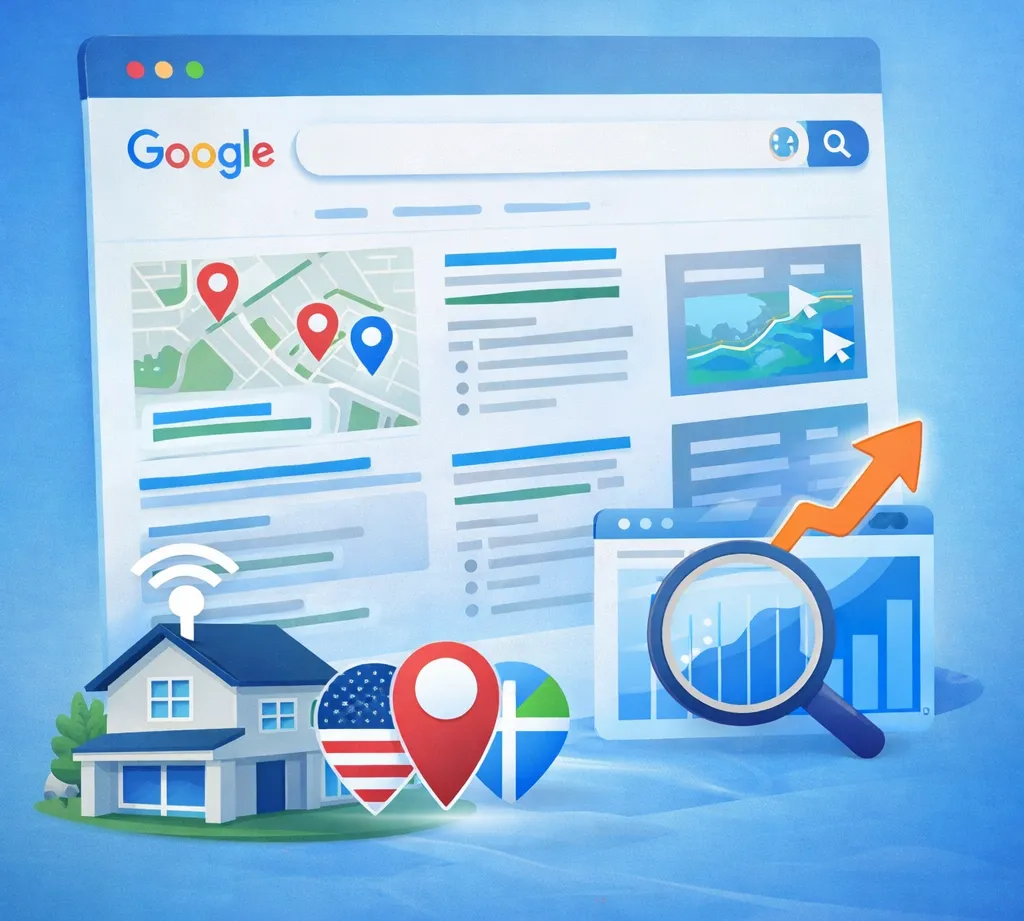
What are Residential Proxies For Market Research Used for?
Residential proxies for market research are used to collect publicly available data from different locations and networks. They help researchers analyze pricing, product availability, trends, and consumer behavior as they appear to users in specific regions, supporting more accurate and location-aware market insights.
Global Market Access
Residential proxies enable access to market data from different countries, helping analyze regional trends and local market conditions.
Competitive Analysis
Analyze competitor pricing, product offerings, and content as they appear across different regions and markets.
SEO Analysis
Analyze search visibility, rankings, and content performance across different regions and markets.
Ad Verification
Verify how ads appear across different regions, platforms, and user environments for accurate market insights.
Price Monitoring
Monitor product pricing across different regions to understand market positioning and regional price variations.
Review Aggregation
Collect and analyze publicly available product reviews to understand customer sentiment across different markets.
Benefits of Market Research Using Residential Proxy
How Using Residential Proxies in Market Research
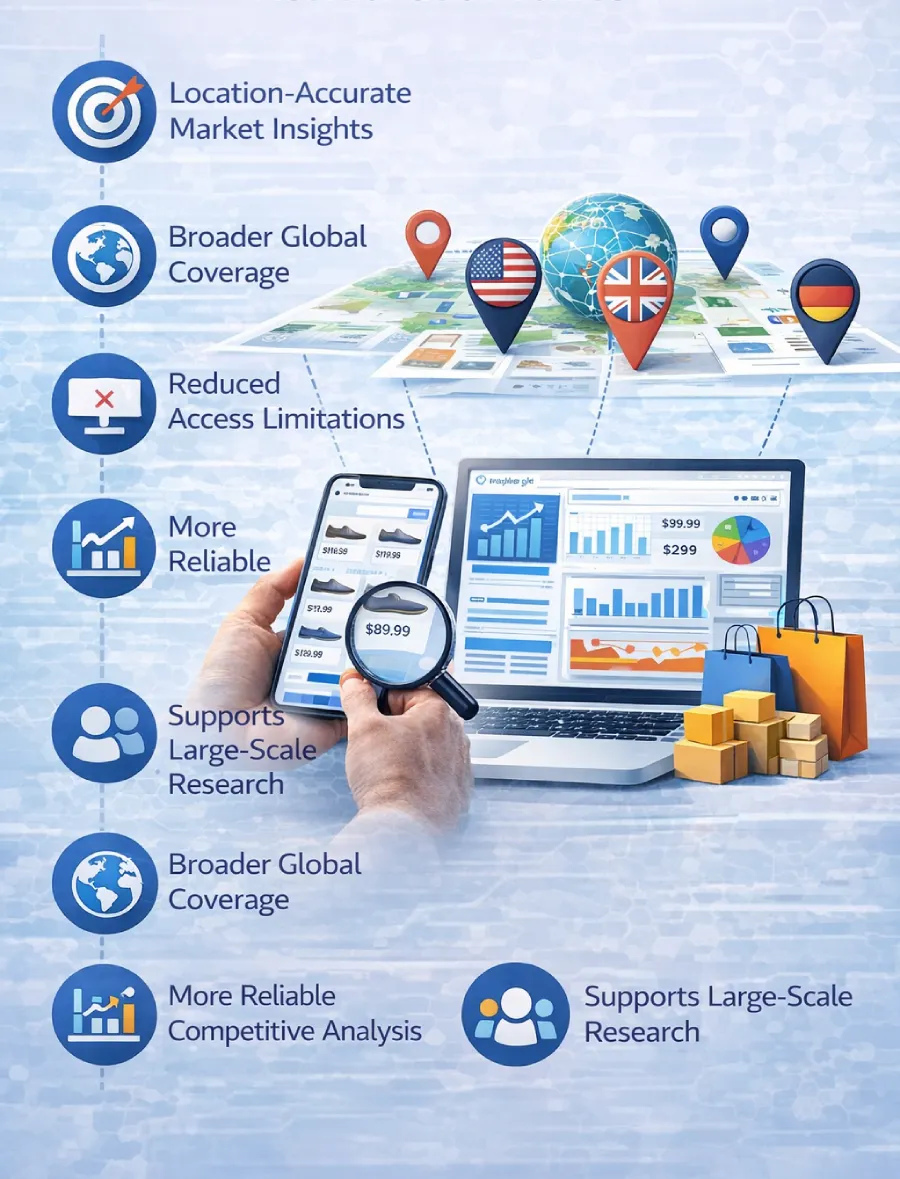
Using residential proxies in market research allows analysts to collect publicly available data through real residential IP addresses, helping reflect how information appears to users in different locations. This makes it easier to observe regional differences in pricing, content, availability, and consumer signals without relying on a single network or location.
Residential proxies are commonly used when research requires location-based accuracy, repeated access, or comparison across multiple markets. By distributing requests across residential IPs, they help reduce access limitations and provide more consistent visibility into market behavior over time.
Frequently Asked Questions (FAQs)
Residential proxies for market research are used to collect publicly available data from different regions. They help analysts access region-specific pricing, content, and consumer signals as local users would see them.
Market researchers use residential proxies to avoid access limitations, reduce bias from single-IP requests, and view data that reflects regional differences in content, pricing, and trends.
Yes. Residential proxies make it possible to access data from specific countries, cities, or regions, helping researchers understand regional market behavior and trends.
Yes. By collecting data through real residential IPs across multiple locations, researchers can compare competitor pricing, offerings, and visibility more accurately than with a single IP.
No. For basic data collection tasks that do not require multiple location access or repeated scraping, proxies may not be necessary. They are most useful when location accuracy and scale matter.
They can help by distributing requests across multiple residential IPs, which reduces the likelihood of access limitations caused by repeated or large-scale data collection.
Using residential proxies to access publicly available data is generally legal, but legality depends on local laws, website terms, and how the data is collected. Professional legal guidance is recommended for sensitive or compliance-related use cases.
Yes. Residential proxies enable researchers to collect data at scale across many regions while maintaining more consistent access compared with single-IP approaches.
Author
Jayden Sprent (Proxy Specialist)
Hi, I'm Jayden Sprent. Dive into the world of proxy servers with my expert evaluations and insightful analyses based on thorough research. I'll share my experiences and comprehensive guides to help you make informed decisions about proxy services.
Learn More About Jayden Sprent