
How Residential Proxy Works for Ad Verification & Monitoring

by Jayden Sprent // March 4, 2026
Residential proxy helps with ad verification and monitoring businesses check ad placements, visibility, and regional delivery using real residential IP addresses.
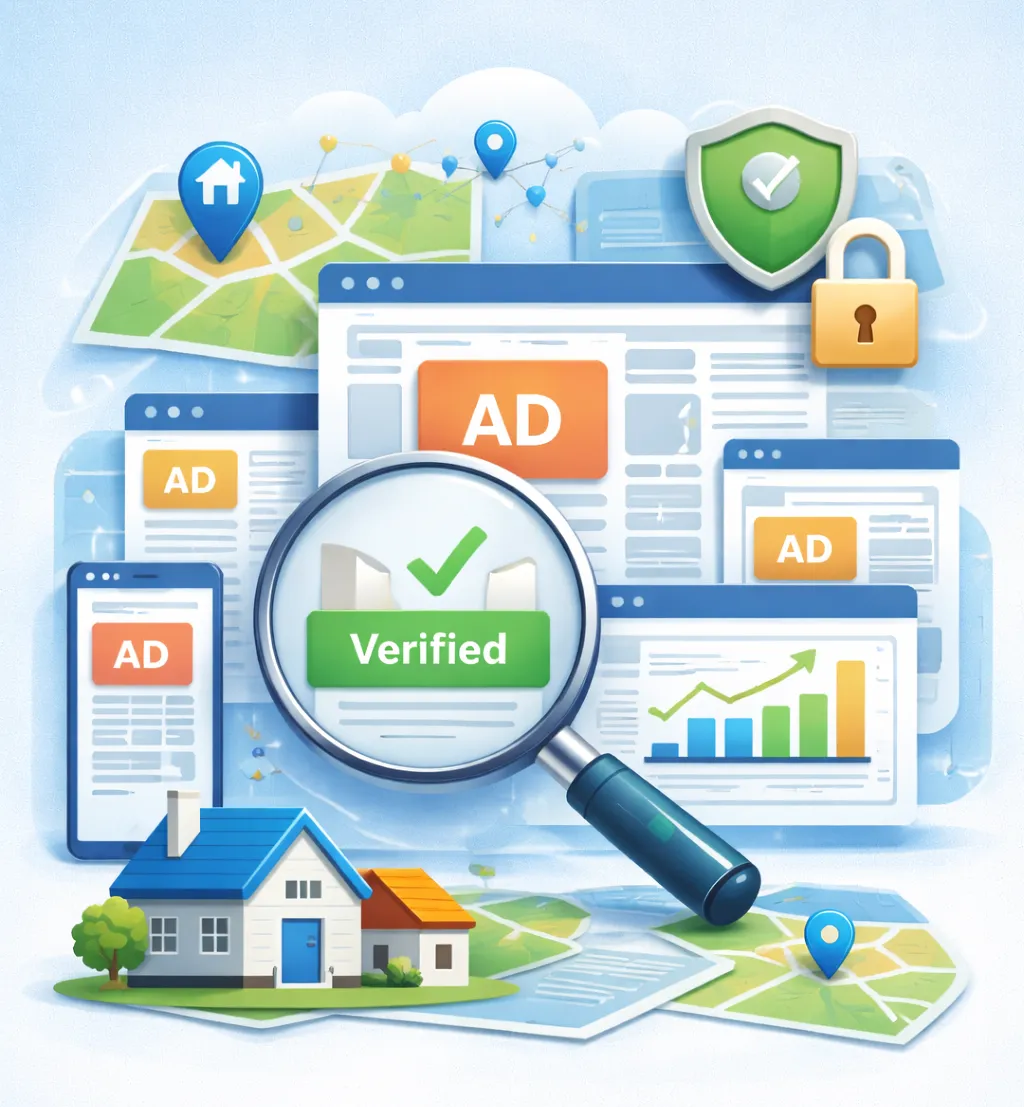
What are Residential Proxies For Ad Verification & Monitoring Used for?
Residential proxies for ad verification and monitoring are used to check how ads appear across different locations, devices, and platforms. By using real residential IP addresses, businesses can view ads as normal users do in various regions.
They help verify ad placements, confirm geo-targeting, monitor visibility, and identify inconsistencies or issues in ad delivery. Residential proxies also support large-scale monitoring by reducing access restrictions during repeated ad checks.
Geo-Targeted Verification
Verify how ads appear in different regions by viewing campaigns through location-specific residential IPs.
Fraud Detection
Detect suspicious ad activity and potential fraud by monitoring campaigns as real users across different locations.
Brand Compliance
Ensure ads follow brand guidelines by monitoring placements, creatives, and messaging across regions.
Competitor Ad Analysis
Analyze competitor ad placements, messaging, and visibility across platforms and regions.
Performance Testing
Test ad loading, delivery, and visibility performance across locations using residential IPs.
Ad Compliance Verification
Verify that ads meet platform policies and regulatory requirements across regions and placements.
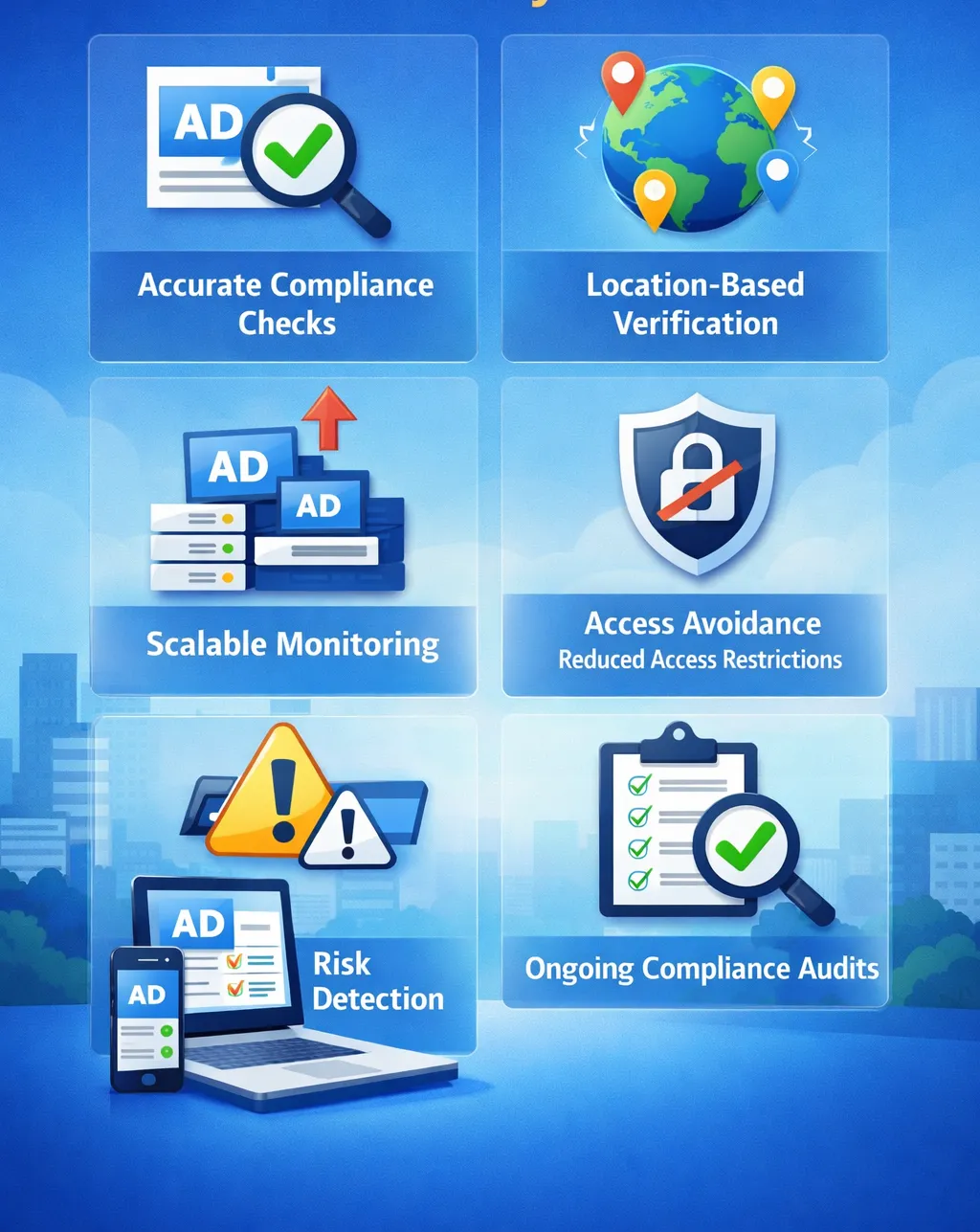
Benefits of Ad Compliance Verification Residential Proxy
The Role of Residential Proxies in Ad Verification & Monitoring
Ad verification and monitoring require viewing ads as real users see them across different locations, devices, and platforms. Residential proxies play an important role by routing requests through real residential IP addresses, which helps reflect normal user behavior more accurately.
By using residential IPs, businesses can verify ad placements, confirm geo-targeting, and monitor visibility without relying on a single location or IP source. This is especially useful when checking regional ad delivery, identifying inconsistencies, or validating compliance across multiple markets.
Residential proxies also support large-scale ad monitoring by reducing access restrictions during repeated checks, helping teams maintain consistent visibility into how campaigns are running over time.
Frequently Asked Questions (FAQs)
Residential proxies are used to view ads as real users see them across different locations and networks. This helps verify ad placement, visibility, geo-targeting, and delivery accuracy.
Residential proxies use real residential IP addresses, which makes ad checks appear more like normal user traffic. This can provide more accurate results compared to using a single server or data center IP.
Yes. Residential proxies allow access from specific countries or regions, making it possible to check whether ads are shown correctly based on geographic targeting.
By monitoring ads across different locations and networks, residential proxies help identify suspicious behavior such as hidden ads, incorrect placements, or unauthorized ad delivery.
They are commonly used to ensure ads follow brand guidelines by checking creatives, messaging, and placements across platforms and regions.
Yes. Residential proxies support repeated and distributed ad checks, which is useful when monitoring multiple campaigns, platforms, or regions over time.
They help simulate real-user access, but results can still vary based on device type, browser settings, and platform-specific ad logic.
Not always. For small-scale or single-location checks, proxies may not be necessary. They become more useful when verifying ads across multiple regions or at scale.
Ad verification typically focuses on publicly visible ads. However, legality depends on local laws, platform terms, and how the data is collected. Professional legal guidance is recommended for compliance-sensitive use cases.
Author
Jayden Sprent (Proxy Specialist)
Hi, I'm Jayden Sprent. Dive into the world of proxy servers with my expert evaluations and insightful analyses based on thorough research. I'll share my experiences and comprehensive guides to help you make informed decisions about proxy services.
Learn More About Jayden Sprent