


In this list, I’ll review the best options to get a residential proxy with crypto payment in 2026 — including cheap pay-as-you-go plans, sticky sessions for safer usage, and transparent pricing so you can choose fast.
Now, let’s jump into the best providers that let you buy residential proxies with crypto.
Best Picks by use-case
- Best cheap with crypto: Floppydata
- Best for scraping: Nodemaven
- Best for account management: Proxy-Cheap
- Best pay-as-you-go: Proxy-Seller
- Best enterprise/clean pool: DataImpluse
The Best Residential Proxy Providers With Crypto Payment for 2026
Here are the best Residential Proxies with cryptocurrency payment methods.
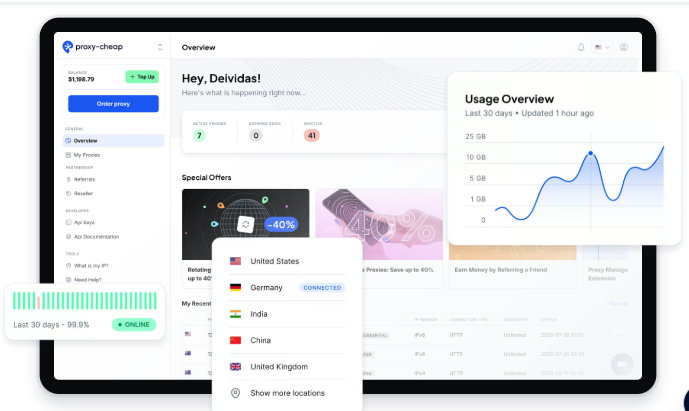
Proxy-Cheap is a budget-friendly option if you want to buy residential proxies with crypto and keep costs low. It supports both rotating residential (good for research/scale) and static residential (better for stable logins and account safety).
Crypto payment: Proxy-Cheap supports cryptocurrency payments (plus card and wire transfer). They also have dedicated pages for paying with Bitcoin, USDT (Tether), Ethereum, Litecoin, and more. For more information, read our Proxy‑Cheap Review.
Pricing
- Rotating residential: $4.99/GB (1GB monthly plan shown).
- Static residential: $1.99 per proxy (7-day trial), then $3.39/month (1-month plan shown).
Performance
- Static plan shows 100+ Mbps and 100+ threads (plus HTTP/SOCKS5).
- Their general residential positioning highlights rotating residential starting at $4.99/GB (so it’s more “value” than premium-speed branding).
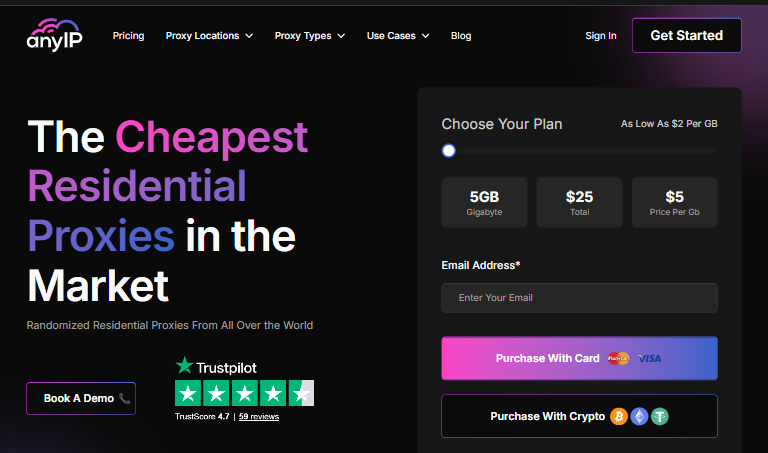
AnyIP is a budget-focused residential (and mobile) proxy provider that pushes a simple value message: “from $2/GB” with one plan that covers both residential + mobile IPs. Crypto buyers clearly support crypto checkout and even have a dedicated page for buying proxies with crypto.
Crypto payment:They accept crypto payments (60+ cryptocurrencies), including BTC, XMR (Monero), LTC, USDT, etc.
Pricing
- Advertised starting rate: from $2/GB
- Example plan pricing: $25/month for 5GB (Micro plan)
Performance
- They claim a ~98.6% request success rate and ~0.6s average response time (marketing stats shown across their site pages).
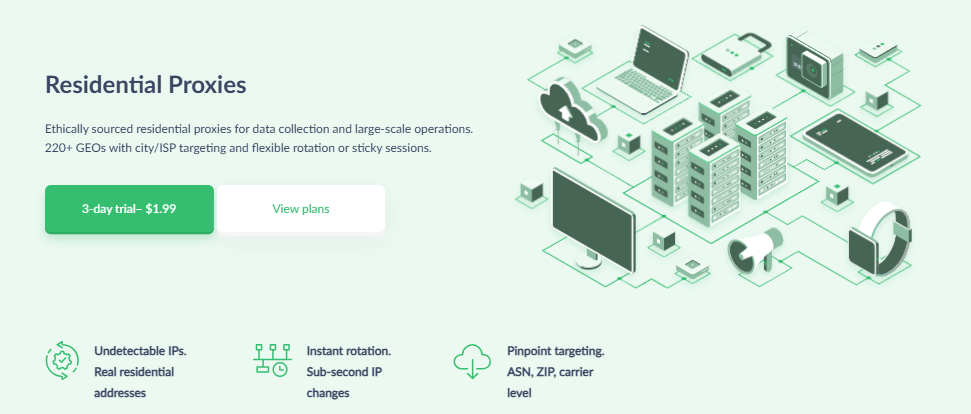
Proxy-Seller’s residential proxies are designed for serious location targeting and controlled rotation. They highlight 20M+ residential IPs, coverage across 220+ countries/regions, and tools like GEO/ISP targeting plus multiple rotation modes (including sticky-style stability), which fits buyers who want safe + predictable performance while still keeping costs competitive.
Crypto payment:Proxy-Seller supports crypto payment options (their checkout/order pages list Bitcoin, Ethereum, and Tether (USDT) among payment methods). For more information, read our Proxy-Seller Review.
Pricing
- Residential proxies are advertised from $0.7/GB (individual plans).
Performance
- 20M+ IPs, 220+ GEOs, supports HTTPS + SOCKS5, and offers username/password or IP allowlisting authentication (useful for tools and teams).
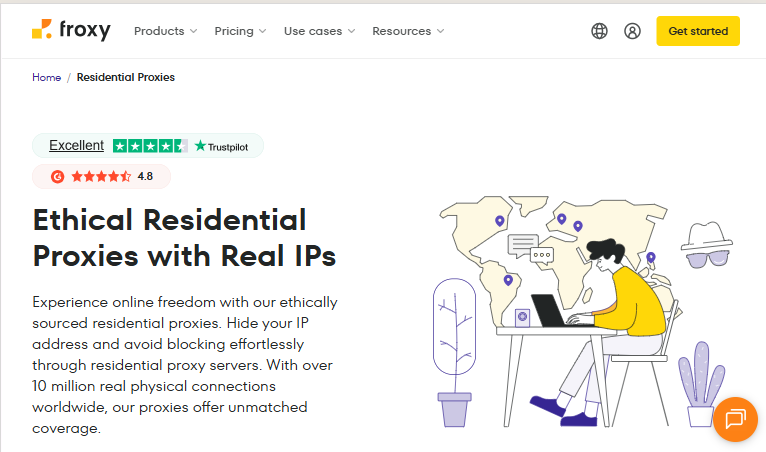
Froxy is a value-focused residential proxy provider with 200+ locations and rotating session residential proxies, making it a solid option if you want to buy residential proxies with crypto and still keep decent geo coverage.
Crypto payment:Froxy says crypto payments are fully supported, including Bitcoin, Ethereum, BinanceCoin, Litecoin, and Tether (USDT).
Pricing
- Residential proxies: start at $2.69/GB (as shown on their site).
- Trial: $1.99 for 3 days (100MB) is mentioned on their pricing/help pages.
Performance (short)
- Claims 10M+ IP pool and 200+ locations.
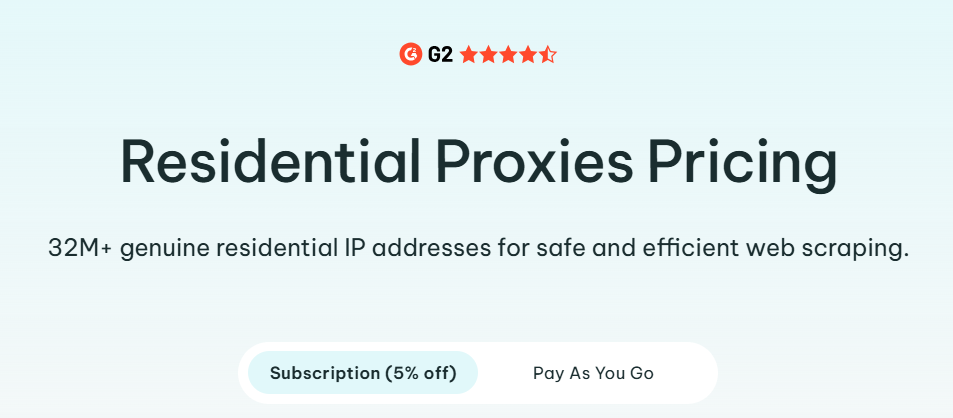
IPRoyal is a strong option if you want to buy residential proxies with crypto but still stick with a well-known provider. It’s beginner-friendly because it offers pay-as-you-go residential traffic that never expires, so you can start small, test, and use your GB slowly without wasting a monthly plan. They also highlight a large network (32M+ residential IPs across 195+ countries).
Crypto payment:IPRoyal supports 25+ cryptocurrencies as payment options (plus cards and wallets). For more information, read our IPRoyal Review.
Pricing
- Starts at $7.00/GB (1GB plan)
- Drops to $4.90/GB (50GB plan)
- They also mention bulk discounts that can go lower (their site cites “as low as $1.75/GB in bulk”).
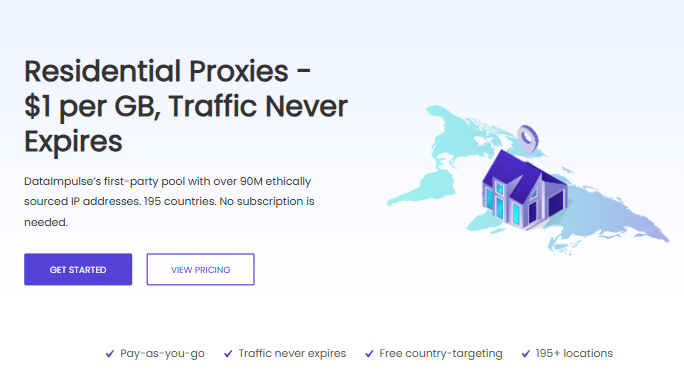
DataImpulse is a pay-as-you-go residential proxy provider that’s built around one simple idea: cheap bandwidth with a big pool. They advertise 90M+ residential IPs worldwide, support rotating + sticky sessions, and include free country targeting—so it’s a good fit if you want to buy residential proxies with crypto and top up only when needed.
Crypto payment:They publish a Crypto Payment Guide (they specifically mention USDT TRC20 setup), and DataImpulse lists crypto-wallet among supported payment methods on their site pages.
Pricing
- Intro: $5 for 5GB ($1/GB)
- Basic: $50 for 50GB ($1/GB)
- Advanced: $800 for 1000GB ($0.8/GB)
Performance
- Claims 90M+ IPs, 195+ locations, supports HTTP(S) + SOCKS5, and offers sticky + rotating sessions.
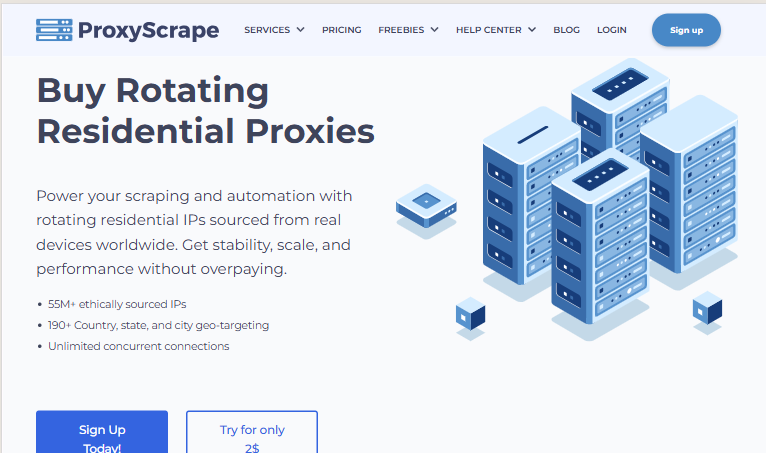
ProxyScrape is a well-known proxy marketplace that offers rotating residential proxies with sticky sessions and geo-targeting by country/state/city. It’s a solid choice if you want a provider that’s easy to buy from, has clear pricing, and supports crypto checkout for privacy-minded buyers.
Crypto payment: ProxyScrape lets you select “Crypto” at checkout and pay with a wide range of cryptocurrencies (they also have a page dedicated to buying proxies with crypto/Bitcoin).
Pricing
- Residential proxies start from $1.15/GB (shown on their pricing page).
Performance
- They advertise a 55M+ rotating residential IP pool, rotating + sticky sessions, and 99.9% uptime.
ProxyWing sells rotating residential proxies with a “budget + easy setup” angle. If your goal is to buy residential proxies with crypto and keep spending low, ProxyWing is positioned as an affordable option with access to large IP pools and rotating sessions.
Crypto payment:ProxyWing supports 25+ cryptocurrencies (they mention coins like BTC, USDT, ETH, LTC, DOGE) on their payment FAQ.
Pricing
Residential proxies are advertised for $2.5/GB.
Performance
They market residential coverage in 190+ countries (site claim).
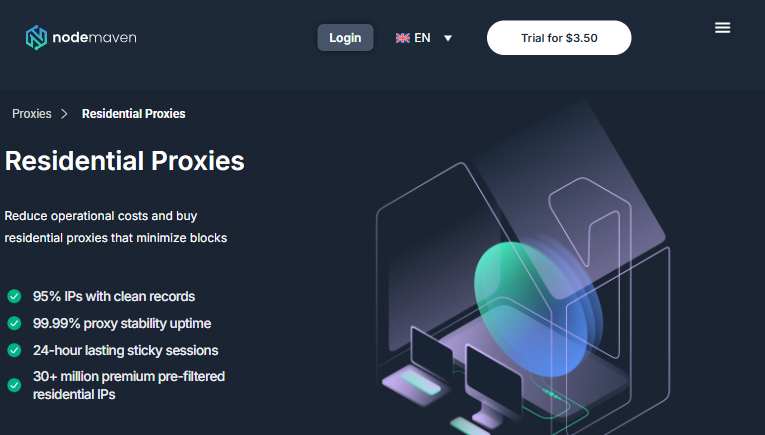
NodeMaven positions itself around IP quality and stability, not just cheap bandwidth. Their site highlights an “IP filtering” system to screen addresses before you use them, aiming to keep IP reputation cleaner (useful for strict platforms). They also emphasize super sticky sessions (up to 24 hours), which is great when you need a stable identity per account/session.
Crypto payment: NodeMaven accepts credit cards and “many cryptocurrency options” (confirmed in their official help center).
Pricing
I tried to open NodeMaven’s official pricing page, but it triggered bot verification in this environment, so I’m using reputable third-party sources for the numbers below.
- Example pricing (reported): €30/month for 5GB (~€6/GB), €56/month for 10GB (~€5.60/GB), €135/month for 25GB (~€5.40/GB).
Performance
- “Super sticky sessions” up to 24 hours (good for Reddit-style session stability).
- Emphasizes quality filtering (cleaner IP reputation focus)
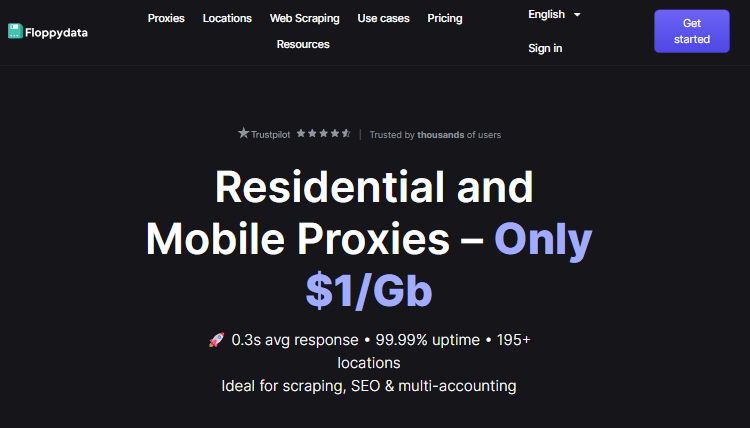
NodeMaven positions itself around IP quality and stability, not just cheap bandwidth. Their site highlights an “IP filtering” system to screen addresses before you use them, aiming to keep IP reputation cleaner (useful for strict platforms). They also emphasize super sticky sessions (up to 24 hours), which is great when you need a stable identity per account/session.
Crypto payment: NodeMaven accepts credit cards and “many cryptocurrency options” (confirmed in their official help center). For more information, read our Floppydata Review.
Pricing
Residential proxies: $1/GB (example packs shown: $9/9GB, $20/20GB, $48/48GB, $96/96GB, $120/120GB).
How to Buy Residential Proxies With Crypto (Step-by-step)
Pick the right proxy type
Static/long sticky = safer for logins & accounts
Rotating = best for research/scale
Choose a plan (start small)Buy the smallest GB/IP plan first to test quality.
Create an accountSign up (some providers may only need email).
Set your access methodSelect username/password or IP whitelist authentication.
Select “Crypto” at checkoutChoose a coin (USDT/BTC/ETH, etc.) and copy the wallet address.
Send payment + confirmComplete the transfer and wait for confirmation.
Get your proxy detailsCopy endpoint/credentials, set rotation or sticky session settings, and test.
Tip: Always test on a small plan first (speed + blocks), then scale.
FAQs: Residential Proxies With Crypto Payment
A residential proxy with crypto payment is a proxy service that routes your traffic through real ISP (home) IP addresses, and lets you pay using cryptocurrencies (like BTC, USDT, or ETH) instead of a card. The proxy type affects performance and safety; crypto is simply the payment method.
Not always. Paying with crypto can improve privacy, but true anonymity depends on the provider’s rules:
- If the provider requires KYC (identity verification), it’s not anonymous.
- If they log detailed billing/user data, it’s less private.
- Some providers accept crypto but still require an email/account, which is normal.
For most buyers:
- USDT (especially TRC20) is often the easiest for payments because fees are usually low and confirmations are fast.
- BTC is widely accepted but can have higher fees and slower confirmation during busy times.
- ETH can be expensive on the mainnet if gas fees are high.
If you want a simple and predictable checkout, USDT is usually the most practical choice.
Some do, some don’t — and many treat crypto refunds differently than card refunds. Common patterns:
- Providers may refund to your account balance instead of sending crypto back.
- Some will refund crypto, but only to the same wallet and after verification.
- Trial plans and small packs are often non-refundable.
Before paying, check their refund policy and assume crypto refunds are stricter than card refunds unless clearly stated.
You can, but it’s riskier if the IP changes too often while you’re logged in. For account logins (Reddit, social, e-commerce), rotating proxies can trigger:
- extra verification checks
- “suspicious login” alerts
- session resets
If you must use rotating, choose sticky sessions so the IP stays stable for a set time (example: 10–30 minutes).
In general:
- Static residential = safer for account activity (stable identity, fewer login checks)
- Rotating residential = better for scale/research (many requests, monitoring, scraping)
A simple rule:
- Posting/commenting/logins → Static (or long sticky sessions)
- Browsing/monitoring/scraping → Rotating